
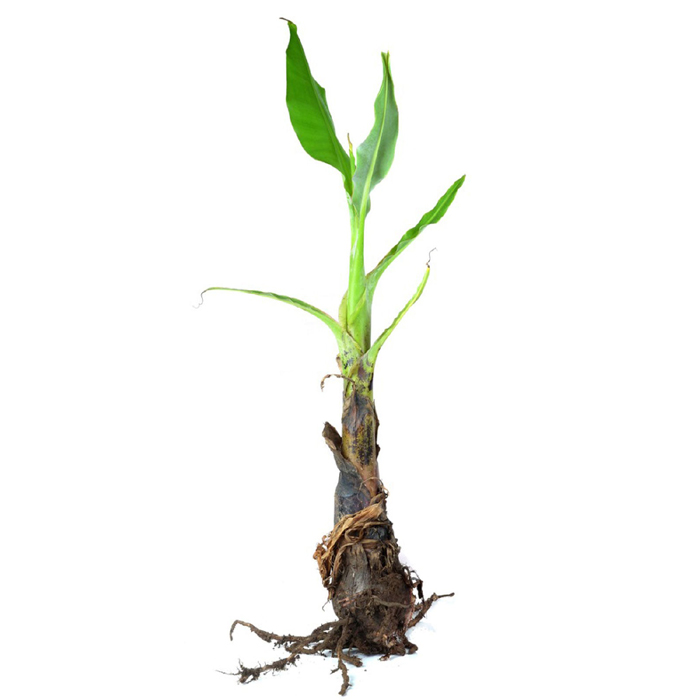
Dwarf plantain
Maintenance Level
Low
Placements
Outdoor shades-Outdoor
Toxic
No
Fragrance
Yes
Seasons
All weather
Plant Height
6ft to 8ft
Water Frequency
Winter
Weekly twice
Summer
Daily
Fertilizer Frequency
Winter
2-4weeks
Summer
2-4weeks
Small Puerto Rican dwarf plantains grow to six feet and produce quickly. With seven to nine full hands of fruit, the fruit is a little larger than other plantains. Dwarf plantains have shorter, thicker trunks that withstand wind better and seldom topple over due to the weight of their own fruit during storms.
<b>Type of soil:</b><br> Deep, rich loamy soil are needed.<br> <b>Type of fertilizer:</b><br> A balanced fertilizer of 8-10-8 (NPK) <br> <b>Development Trend Moderate</b><br> Pruning: Rubbing leaves cause damage to the fruit, thus these should also be clipped during routine maintenance. As needed, prune older leaves as well as diseased leaves. Green leaves ought not to be taken off. <br> Repotting: Since banana plants develop quickly, they need be replanted once a year.<br> Propagation: The main methods used to spread bananas are rhizomes and suckers, specifically water and sword suckers. In its early stages, sword suckers have narrow leaf blades shaped like swords and a well-developed base.<br><br> <b>Process</b><br> 1. Prepare the soil Deep, rich loamy soil is preferred by banana plants<br> 2. Select the Place: To avoid waterlogging, make sure the pot you select includes drainage holes.<br> 3When planting the banana, carefully take it out of its current place, being careful not to damage its roots.<br> 4. Watering: To help the soil settle, water the plant as soon as it is planted. Make sure the soil is constantly damp but not drenched.<br> 5. Light and temperature: The ideal temperature range for banana trees is 78 to 86 degrees Fahrenheit. They need six to eight hours a day in direct sunlight..<br> 6. Fertilizing: Fertilize your banana trees frequently to ensure healthy growth and fruit output. Make use of a balanced fertilizer with an 8-10-8 NPK ratio.
Dwarf bananas grow well in flats and on balconies, making them perfect for limited places. Gather your own sweeter bananas -they're simple to cultivate and care for. Enhances air quality and wellbeing, offering a touch of the tropics and conversation starters.
Dos
Give it an abundance of light.<br> Pay attention to the watering schedule.<br> Verify that there is enough drainage.<br> Frequent fertilize it.<br> Ensure that the air is humid.<br> Maintain a steady temperature.<br> Every now and then, tidy the leaves.<br> Make sure to keep an eye on things frequently.
Don'ts
Avoid using dangerous chemicals on plants. Never use salty or chlorineated water to water the plants. Plants should never be planted in planters without holes for drainage. Make sure to puncture holes in grow bags, planters, and containers. Avoid placing the plant in intensely hot direct sunlight as the stem and leaves could burn.