
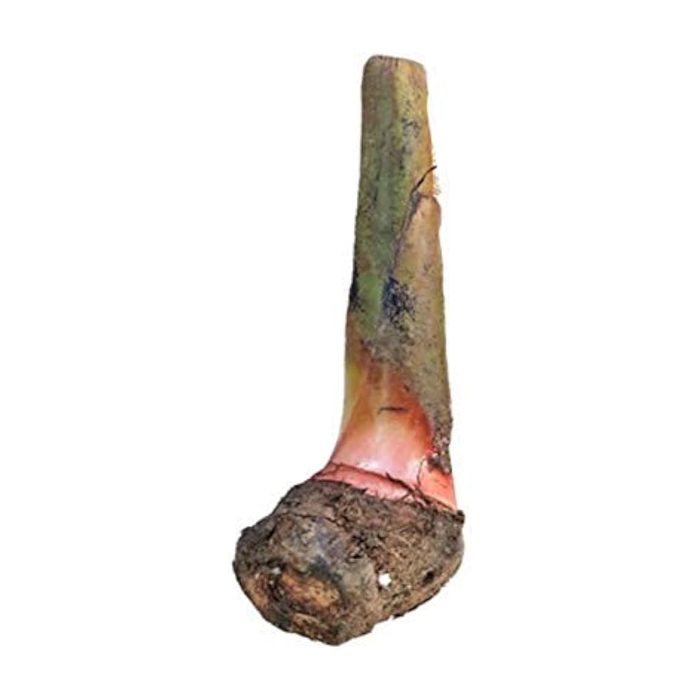
Alpan(poovan)
Maintenance Level
Low
Placements
Outdoor shades-Outdoor
Toxic
No
Fragrance
Yes
Seasons
All weather
Plant Height
16ft to 20ft
Water Frequency
Winter
Weekly twice
Summer
Daily
Fertilizer Frequency
Winter
2-4weeks
Summer
2-4weeks
The banana cultivar is called Alpan (Poovan). It is referred to as Poovan in Tamil Nadu, Karpura Chakkarakeli in Andhra Pradesh, and Alpan in the northeast. Growing it through perennial culture is the most popular technique.
<b>Type of soil:</b><br> Deep, rich loamy soil are needed.<br> <b>Type of fertilizer:</b><br> A balanced fertilizer of 8-10-8 (NPK) <br> <b>Development Trend Moderate</b><br> Pruning: Rubbing leaves cause damage to the fruit, thus these should also be clipped during routine maintenance. As needed, prune older leaves as well as diseased leaves. Green leaves ought not to be taken off. <br> Repotting: Since banana plants develop quickly, they need be replanted once a year.<br> Propagation: Typically, banana trees are multiplied through suckers, or offshoots, which emerge from the base of older plants. Plant healthy suckers in holes that have been prepared.<br><br> <b>Process</b><br> 1. Prepare the soil Deep, rich loamy soil is preferred by banana plants<br> 2. Select the Place: To avoid waterlogging, make sure the pot you select includes drainage holes.<br> 3When planting the banana, carefully take it out of its current place, being careful not to damage its roots.<br> 4. Watering: To help the soil settle, water the plant as soon as it is planted. Make sure the soil is constantly damp but not drenched.<br> 5. Light and temperature: The ideal temperature range for banana trees is 78 to 86 degrees Fahrenheit. They need six to eight hours a day in direct sunlight..<br> 6. Fertilizing: Fertilize your banana trees frequently to ensure healthy growth and fruit output. Make use of a balanced fertilizer with an 8-10-8 NPK ratio
The fruit of the banana is a rich source of potassium, vitamin C, and dietary fiber, among other important elements. Blood pressure, digestion, and heart health can all be maintained and enhanced by include bananas in your diet.
Dos
Give it an abundance of light.<br> Pay attention to the watering schedule.<br> Verify that there is enough drainage.<br> Frequent fertilize it.<br> Ensure that the air is humid.<br> Maintain a steady temperature.<br> Every now and then, tidy the leaves.<br> Make sure to keep an eye on things frequently.
Don'ts
Avoid using dangerous chemicals on plants. Never use salty or chlorineated water to water the plants. Plants should never be planted in planters without holes for drainage. Make sure to puncture holes in grow bags, planters, and containers. Avoid placing the plant in intensely hot direct sunlight as the stem and leaves could burn.