
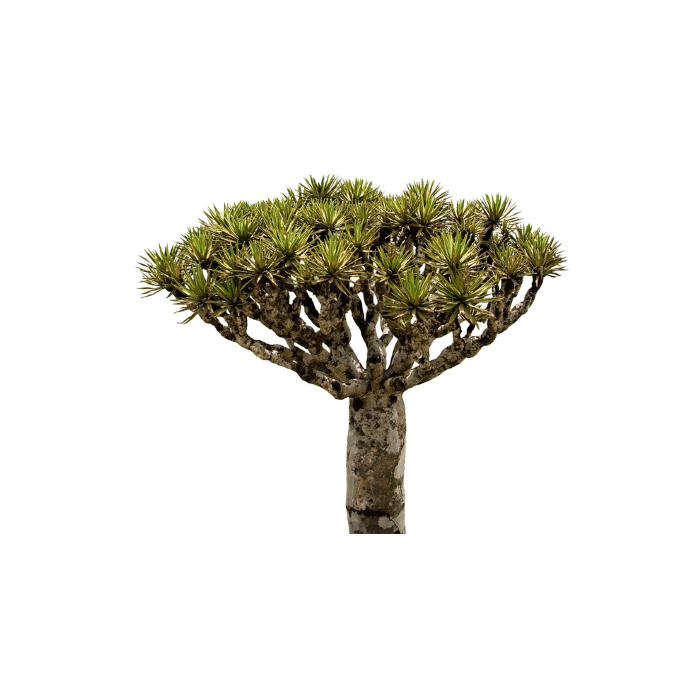
Socotra Dragon Tree (Dracaena cinnabari)
Maintenance Level
Low
Placements
Outdoor
Toxic
Low
Fragrance
Yes
Seasons
All weathers
Plant Height
33ft
Water Frequency
Winter
Weekly once
Summer
Daily
Fertilizer Frequency
Winter
2-3months
Summer
2-3months
The Socotra dragon tree, also known as the dragon blood tree or Dracaena cinnabari, is indigenous to the Arabian Sea region of Yemen's Socotra archipelago. The red sap that the trees yield is named for its blood-like hue. It is regarded as Yemen's national tree.
<b>Type of soil</b><br> Well drained soils and porous are needed<br> <b>Type of fertilizer</b><br> controlled- relese Fertilizer<br> Fast Growth Pattern<br> Pruning: Air layering or cuttings are the more popular methods for tree propagation.<br> Repotting: Give this plant a yearly or every other year repotting.<br><br> <b>Process</b><br> Climate: Hot, dry, bright weather is necessary for dragon blood trees. They cannot withstand high humidity levels or frost, nor will they endure frigid temperatures. Soil: Dragon blood trees like sandy, well-draining soil that has a pH of 6.0 to 7.0, which is slightly acidic to neutral. Heavy or poorly draining soils do not suit them. Water: Dragon blood trees require some water to survive, even though they are drought-tolerant. Water the tree deeply but sparingly to simulate the periods of drought interspersed with strong downpours that it would naturally encounter.
There formerly existed a belief that plant resin could treat anything, including ulcers, wound healing, and digestive and respiratory problems. Additionally, antibacterial, anti-inflammatory, and anti-diabetic effects have been reported for it. These days, it's still utilized as a body oil, incense resin, and violin varnish.
Dos
Planting the dragon blood tree in an area with lots of sunlight and well-draining soil is ideal because the tree enjoys a warm, dry climate.<br> Regular watering of the tree is important, but avoid overwatering it as this might cause root rot.<br> During the growing season, fertilize the tree once a month with a balanced fertilizer to help encourage healthy growth.<br> Frequently prune the tree to get rid of any broken or dead limbs.<br> Since the tree is susceptible to both severe heat and cold, protect it from both extremes in temperature.<br> Look out for pests that can harm the tree, such as mealybugs and aphids. Use a safe and efficient pest control strategy to get rid of any pests you find.
Don'ts
Avoid positioning your Dracaena in an area where it will be exposed to direct sunlight as this might scorch the leaves and cause damage.