
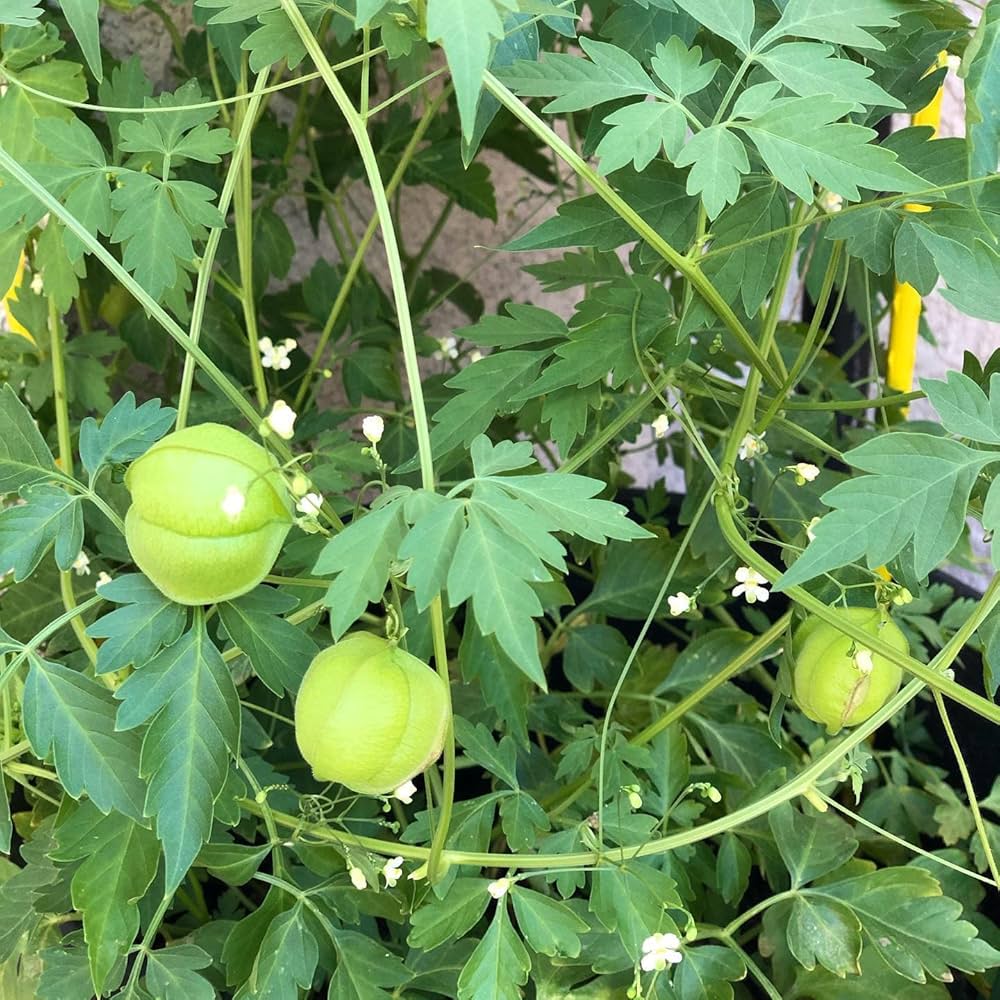
Mudakkathan keerai-Balloon vine
Maintenance Level
Low
Placements
Outdoors
Toxic
No
Fragrance
Low
Seasons
Spring and winter
Plant Height
32ft
Water Frequency
Winter
4-6 days
Summer
10-12 days
Fertilizer Frequency
Winter
4weeks
Summer
4weeks
The fruit of the perennial climber mudakathan resembles a balloon. This plant is easily recognized by its magnificent green fruit that resembles a balloon and its leaves. This mudakathan keerai is easily found along the roadsides and wastelands of Tamil Nadu.
<b>Type of soils</b> <br> well-drained soil rich in organic matter such as compost or composted manure<br> <b>Type of Fertilizer</b><br> nitrogen-based fertilizer (21-0-0) <br> Fast grow pattern<br><br> <b>Process</b><br> 1. Use farmyard manure or organic compost to prepare the garden or field. Then begin planting the seeds, spacing them one inch apart and planting them nearly half an inch deep in the ground..<br> 2. After one week of seeding, you will notice the seeds begin to sprout. Make careful to soak the seeds for the entire night before planting for optimal germination and growth..<br> 3. Apply half the nitrogen, phosphorus, and well-decomposed cow dung. And immediately following each cutting, administer the leftover nitrogen in the two doses.<br> 4. Watering spinach frequently is necessary to maintain healthy plant growth and seed germination. Provide the initial irrigation as soon as the seedlings are sown.<br> 5. September through October are the best months of the year to sow spinach plants. Furthermore, the months of mid-February through April are highly suggested during the spring season.
Strong anti-inflammatory qualities can be found in mudakathan keeerai or leaves. It works well for treating cough, lumbago, and certain neurological conditions. When applied as a sticky paste to the hair or scalp, it can provide relief from dandruff and itchy scalp irritation.
Dos
When growing spinach, it is best to stay away from excessive nitrogen fertilizer and low water treatment.
Don'ts
Avoid harvesting the crop right after spraying. At least seven days after spraying, harvest.